Child Education Planning: Costs & Investment Strategies
Table of Contents
Understanding Child Education Costs & Inflation
How to Build a Corpus for Your Child's Education
The joy of welcoming a child is unparalleled. However, parenthood also comes with significant financial responsibility. While most people anticipate pregnancy and delivery costs, many don’t realize the full picture of child-related expenses, which begin right after childbirth.
Initial Childcare expenses
- Newborn Essentials & Celebrations : Diapers, wipes, clothes, bottles, and baby food are just the beginning. Setting up a nursery with furniture, bedding, and safety gear adds to the initial costs. In addition to the above, Indian families spend money on ceremonies and celebrations to welcome the newborn.
- Childcare : Daycare, nannies, or in-home care become crucial for working parents. These expenses can vary greatly depending on location, type of care, and the number of children.
- Early Learning : Playgroups, preschools, or enrichment programs can provide valuable social and educational experiences but come with additional costs.
Schooling expenses
As your child enters formal schooling, expenses multiply. The cost of education in India varies greatly depending on several factors:
- Type of School : Government schools are significantly cheaper than private schools.
- Location : Tier 1 and Tier 2 cities generally have higher education costs than smaller towns and rural areas.
- School Board : IB, CBSE, ICSE, and state boards have varying fee structures.
- Grade Level : Preschool, primary, secondary, and higher secondary education have different costs.
- Additional Expenses : Admission fees (one-time cost), Transportation fees (vary depending on distance), Books and stationary, Uniforms, Extracurricular activities etc...
Special Sport Schools
Does your child possess exceptional athletic ability? Then explore specialized sports institutions, to provide your child with the ideal platform to hone their sporting talent while receiving a strong academic foundation. With the right support system, these schools can be instrumental in helping your child achieve their athletic aspirations.
India boasts a growing number of specialized schools that cater to these young athletes, offering a unique blend of rigorous academic programs alongside dedicated sports training.
Benefits of Sports-Focused Schools
- Expert Guidance : Aspiring athletes benefit from instruction from experienced coaches, fostering proper technique and maximizing their potential.
- Holistic Development : These schools prioritize a balanced approach, cultivating both academic excellence and athletic prowess, promoting well-rounded individuals.
- Injury Prevention and Performance Enhancement Structured training programs emphasize proper technique and conditioning, reducing the risk of injuries while optimizing performance.
Considerations for Parents
- Admission Process : Entry into these schools may involve talent assessments to identify the most promising athletes.
- Financial Investment : Special sports schools often have higher tuition fees compared to traditional schools.
- Time Commitment : Balancing academic studies with intensive sports training demands significant dedication from both students and parents.
Investigate the school’s track record in nurturing academic success and producing talented athletes. Evaluate the quality of sports facilities specific to your child’s chosen sport, ensuring access to top-notch equipment and training areas. Consider factors like travel distance, boarding options, and overall financial implications.
Schools for children with special Needs
Every child deserves a nurturing and stimulating learning environment. For parents of children with special needs, finding the right school can feel overwhelming. But worry not!
The first step is to understand your child’s specific needs and learning style. Do they have visual impairments, hearing difficulties, learning disabilities, or developmental delays? Different schools cater to various needs.
Types of Special Schools
- Special Needs Schools : These schools focus exclusively on children with disabilities, providing specialized instruction and therapy.
- Inclusive Schools : These schools integrate children with special needs into mainstream classrooms, offering support services.
Choosing the Right School:
- Curriculum : Look for schools that offer a curriculum aligned with your child’s needs and learning style. Does the school cater to students planning to pursue higher education or vocational training?
- Teacher-Student Ratio : Smaller class sizes allow for more personalized attention.
- Therapies Offered : Does the school have therapists specializing in occupational therapy, speech therapy, or physiotherapy, if needed?
- Infrastructure : Look for accessible facilities, including ramps, elevators, and adapted washrooms.
- Location and Accessibility : Consider the commute and if transportation services are available.
Schedule visits to shortlisted schools to experience their environment and meet the staff. Connect with other parents to gain insights and recommendations. Explore government schemes for financial aid or scholarships for special education.
Finding the right school is an investment in your child’s future. By considering these factors and utilizing available resources, you can ensure your child receives the best possible education and thrives in a supportive environment.
Under Graduation & Post Graduation Costs:
In India:
The cost of undergraduate and Post Graduation studies in India also varies depending on factors like:
- University : Public universities are generally cheaper than private universities.
- Program : Engineering, Medical, and Management courses tend to be more expensive.
- Location : Similar to schooling, Tier 1 and Tier 2 cities have higher costs.
- Additional Expenses : Hostel fees (applicable for students residing outside their hometown), Examination fees, Course materials, Living expenses etc...
Studying Abroad:
The cost of studying abroad is substantially higher. Tuition fees, living expenses, and currency fluctuations add up to a significant financial burden. Popular study destinations like the US, UK, Australia, and Canada have consistently higher education costs.
Factors to consider when your child is planning to do UG or PG abroad:
- Total education cost : This includes tuition fees, living expenses (housing, food, transportation), course materials, student visa fees, health insurance, and travel costs. Research universities and programs to get a realistic idea of these costs. Remember, undergraduate programs typically last 3-4 years, so factor in the total cost for the entire duration.
- Cost Differences between UG and PG : While undergraduate programs typically have lower tuition fees, the total cost can be higher due to the longer duration (usually 3-4 years). This means you’ll be responsible for living expenses for a much longer period compared to a postgraduate program (1-2 years). However, program and university variations can influence the overall cost.
- Financing Options : Explore scholarships, grants, and education loans to help cover the costs. Scholarships and grants are typically need-based or merit-based financial aid awarded by universities or organizations. Education loans come with interest rates and tax deductions, so carefully compare options before choosing.
- Currency Fluctuations : If you’re paying in a foreign currency, consider how exchange rates might affect the total cost.
- Part-time Work Opportunities : In some countries, international students are allowed to work part-time to offset some living expenses. Research visa regulations and work opportunities in the target country.
- Return on Investment (ROI) : Consider the potential career benefits and increased earning potential after your child graduates with a foreign degree.
Start saving and investing early to build a corpus for your child’s education. Create a detailed budget that factors in all potential expenses. Consult a financial advisor to create a personalized plan for financing your child’s education abroad. The sooner you start Child Education Planning and saving, the better prepared you’ll be financially.
Essential Calculations for Child Education Planning
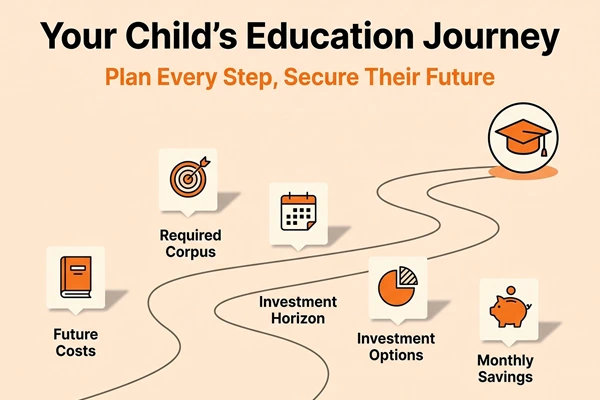
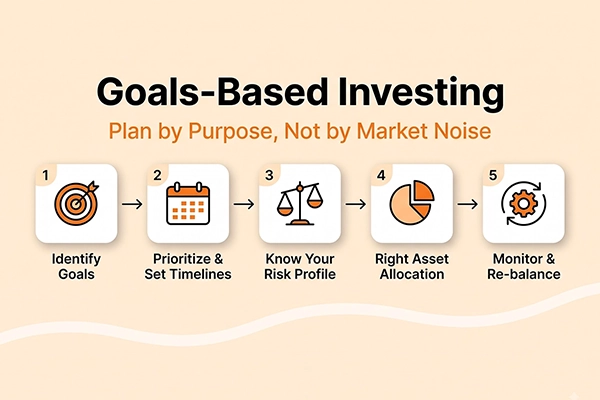
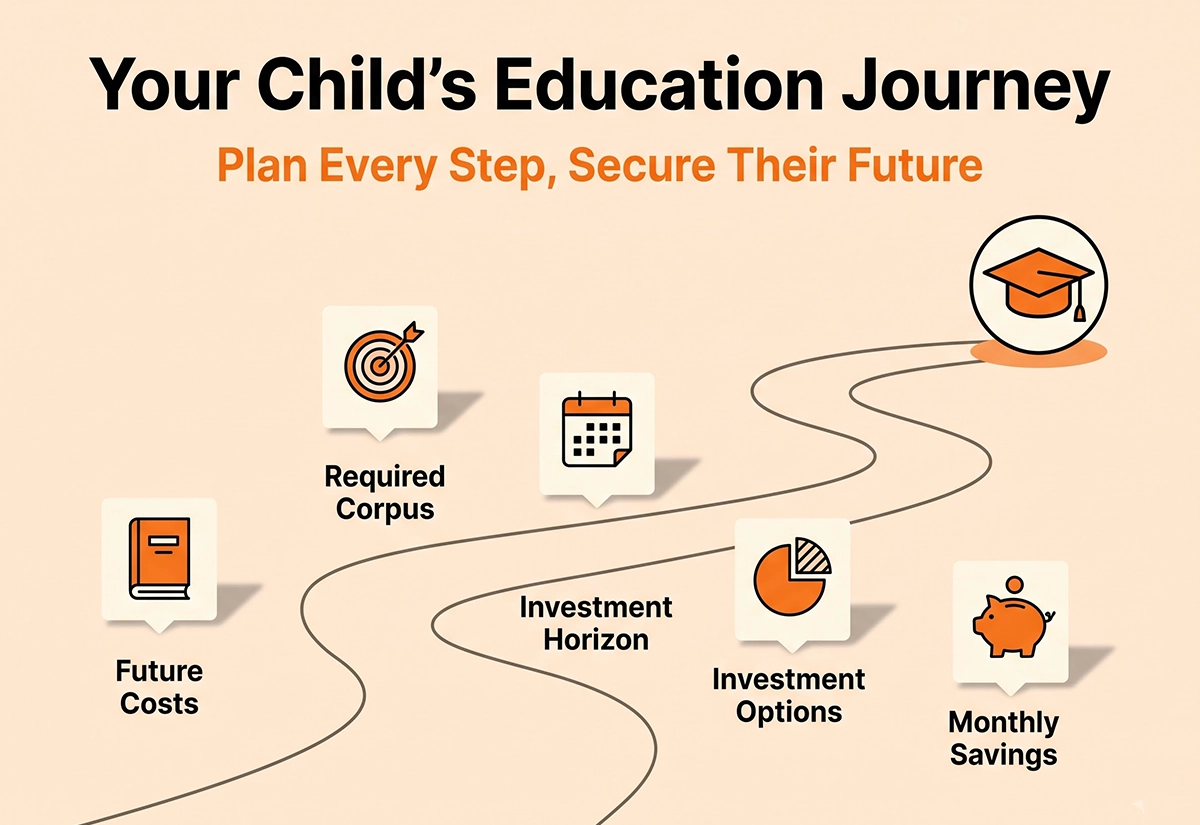
To effectively plan for your child’s education, you’ll need to perform these calculations:
- Estimate future education costs : Research the current costs of your desired institutions and inflate them using an estimated education inflation rate.
- Calculate required corpus : Determine the total amount needed for your child’s education by considering all expenses.
- Determine investment horizon : Calculate the number of years until your child starts their education.
- Choose investment options : Select suitable investment options based on your risk tolerance and time horizon.
- Calculate required monthly savings : etermine the amount you need to invest regularly to reach your goal.
- Alternative options to fill the gap : If your current savings and regular income aren’t enough to fully cover your child’s education abroad, there are several options to explore. These include education loans, scholarships, and even part-time work opportunities for your child while they study.
Example:
| Child Education Planning | 5 Years | 10 Years | 15 Years | 20 Years |
|---|---|---|---|---|
| Child Higher education expenses | ₹ 50,00,000 | ₹ 50,00,000 | ₹ 50,00,000 | ₹ 50,00,000 |
| Number of Years for the education | 5 | 10 | 15 | 20 |
| Average Education Inflation | 10% | 10% | 10% | 10% |
| Future value of the Higher education expenses | ₹ 80,00,000 | ₹ 1,30,00,000 | ₹ 2,10,00,000 | ₹ 3,40,00,000 |
| Investment Instrument | Hybrid | Equity | Equity | Equity |
| Expected Rate of Return per annum | 8% | 10% | 10% | 10% |
| Fixed Monthly SIP | ₹ 1,08,000 | ₹ 64,000 | ₹ 52,000 | ₹ 46,000 |
| Step Up Monthly SIP (step up @ 5% Per annum) | ₹ 1,05,000 | ₹ 57,000 | ₹ 42,000 | ₹ 35,000 |
| Difference in fixed & Step-Up SIP | ₹ 3,000 | ₹ 7,000 | ₹ 10,000 | ₹ 11,000 |
Starting early and being a consistent investor is the key to your children’s bright Future
The Gradual Shift:
Here’s how to go conservative with your investments gradually as your children’s education goal for using the funds approaches:
- Don’t make drastic changes : Avoid a sudden shift from equity to debt entirely. Equity markets have the potential for higher returns, and a complete switch might leave you short of your goal if the market dips near your target date.
- Implement a Staggered Approach : Instead, consider a gradual transition over a specific timeframe, like 6 months to a year, depending on your risk tolerance and time horizon. This allows you to benefit from potential market upsides while reducing volatility closer to your goal.
- Utilise Systematic Transfer Plan (STP) : Set up an STP to automatically transfer a fixed amount from your equity fund to a debt fund at regular intervals. This disciplined approach helps you average out the cost of debt investments and reduces the impact of market fluctuations.
- Choose Low-Risk Debt Funds : Opt for debt instruments with lower risk profiles. Here are some options:
- Liquid Funds : These offer high liquidity and minimal interest rate fluctuations, making them ideal for short-term goals within a few months.
- Short-Term Debt Funds : Invest in these funds if your goal is 1-2 years away. They offer slightly higher returns than liquid funds with a bit more risk.
- Fixed Maturity Plans (FMPs) : Consider FMPs with a maturity date aligned with your goal. They offer predetermined returns but have lower liquidity compared to open-ended debt funds.
Keep a close eye on your portfolio and adjust your allocation if necessary. As your goal date approaches, you might need to further increase your debt allocation for additional security.
Child Education Planning is a long-term financial commitment that requires careful consideration. By understanding the costs, factors influencing them, and the impact of inflation, you can make informed decisions. Don’t let financial worries hold your child’s future back! Take action today. Remember, even small amounts saved consistently can make a big difference. Schedule a consultation with a financial advisor to create a personalized plan that fits your family’s budget and goals. The earlier you start child education planning, the more prepared you’ll be to invest in your child’s bright future.
 Book Your Free Introductory Call