
6 Reasons to Review Your Financial Plan for Better Financial Health
Table of Contents
6 Reasons You Should Review Your Financial Plan Regularly
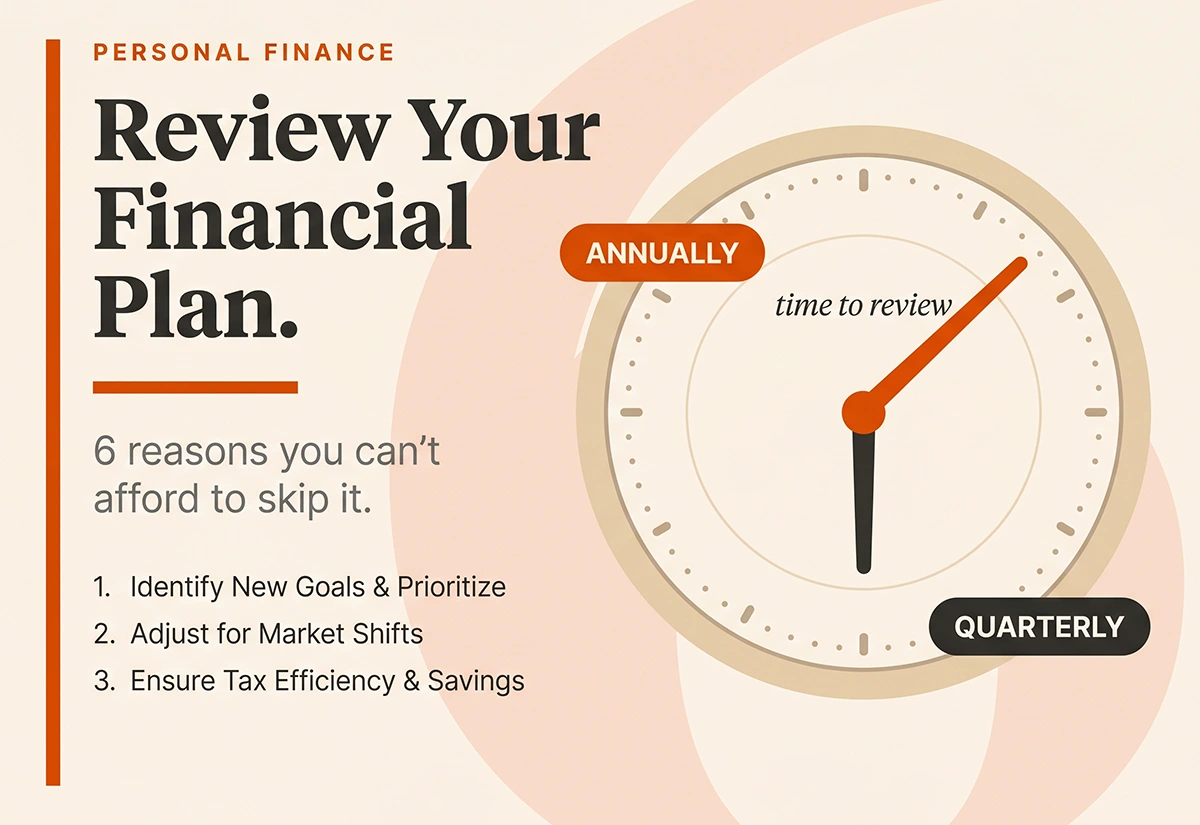
Reviewing your financial plan works like using a reliable navigation system. It keeps your direction clear and steady as you move forward. Without regular checks, your financial journey can easily drift off track. It becomes similar to a road trip where you forget to check your map or fuel level. Small misses can quickly turn into unexpected detours and confusion.
Your financial journey keeps changing with time. Life situations shift. The economy moves. Investment conditions evolve. Very few things stay the same for long. Because of this, a fixed plan alone is not enough. You need regular reviews to stay aligned with reality.
This process is not about controlling every detail of your money. It is about staying flexible and responsive. You adjust your plan based on real changes in your life. This keeps your strategy practical, relevant, and strong in different situations.
6 reasons to regularly review your financial plan
A detailed review of your financial plan helps you stay aligned with changing conditions and also highlights risks and opportunities at the right time. This kind of review supports stronger financial stability and encourages long term growth. Regular evaluation is not just a good habit. It plays a key role in managing complex financial situations with clarity and confidence.
Continuous review of your financial planning ensures that you will be on the right path and will not deviate from your objectives. Financial planning is similar to the financial guidance system that helps you change your course and enables you to reach your destination in an orderly manner.
This blog explains six key reasons why reviewing your financial plan matters. It is just as important as maintaining a vehicle for a smooth and safe journey. Regular attention keeps your financial path clear, steady, and well directed.
1. Review of your expenses & Goals
- Your goals and priorities change over time, so you should review and revise them whenever needed and keep your financial planner informed.
- Unexpected expenses, changes in income, and new personal aspirations can disrupt your financial plan, and even small shifts in spending habits or investment returns can slowly move you off track.
- Regular reviews work like a radar system, helping you detect changes early and adjust your course while still staying close to your goals.
2. Regular periodic reviews to assess your progress
- By comparing your current situation with your financial plan, you can measure your progress toward each goal. This shows where you are doing well. It also shows where you need to improve your strategy.
- You should review your financial plan at least once a year. This helps you confirm if you are on track to reach your goals. It also helps you understand any gaps if you did not follow the plan as recommended.
- You should take corrective action when you find deviations. This includes changes in your asset allocation or financial goals.
3. Review After Major Life Events
- Life brings both expected and unexpected changes that can impact financial planning.
- Events like marriage, birth of a child, career change, or early retirement can significantly affect financial goals, so you should review and adjust your plan accordingly to stay on track
- You should keep your financial planner informed about changes in your life, career, or financial objectives
4. Changes in Market Circumstances or Investment Instruments
- The financial market keeps evolving and new investment opportunities may arise that were not available when the plan was created, so you should review and adjust your plan to match current conditions.
- A strategy that worked earlier may not remain suitable today, so regular reviews help ensure investments align with current financial goals.
- You should monitor economic and market changes and adjust your financial plan based on your risk tolerance and prevailing market conditions.
5. Updates in Tax Laws
- Tax regulations change over time and can impact your financial plan, so you should review your plan to understand effects on tax liability, investment returns, and overall goals.
- You should focus on changes that affect your income bracket, investment choices, and deductions, and then evaluate their impact on your existing plan.
- Recent examples include changes in Indian tax slabs under the new regime that benefit High Net Worth Individuals (HNI), and changes in debt mutual fund taxation where indexation benefits were removed for long term capital gains (LTCG) on investments made after 31 March 2023, leading to tax on full gains at slab rates and potentially higher tax liability.
6. Be Pro-active & Don't Hesitate To Ask Questions
- Waiting until a crisis erupts to deal with any financial problems would be similar to driving your car with insufficient oil pressure, which can prove very dangerous.
- A review will enable you to see any possible threats before they spiral out of control.
- There should be no hesitation in contacting your financial advisor should any questions arise in your mind.
Motivation & Progress Tracking
Seeing progress keeps you focused on your financial goals. It builds consistency in your actions. It also strengthens your commitment when you track and adjust your plan. A clear plan gives reassurance. You know the direction you are moving in. Treat your financial plan as a living document. It should grow with your life. Regular reviews keep it useful and relevant. This helps you move forward with confidence and peace of mind.
How Often You Should Review Your Financial Plan?
The review frequency depends on your situation. It also depends on how complex your finances are.
- Quarterly reviews : suit dynamic financial situations. They also suit higher risk investments
- Biannual reviews : suit stable income. They also suit moderate risk levels
- Annual reviews : suit simple and stable financial plans. They also suit low volatility
Each review cycle keeps you aware of changes. It also helps you control your financial direction better.
Key Principle for Reviews
- Stay consistent with your reviews.
- Stay proactive at all times.
- Do not wait for problems to appear.
- Treat each review like an important appointment.
- It supports your long term stability.
- Regular attention reduces surprises.
- It also improves financial discipline.
Value of Regular Reviews
Regular reviews build a strong financial base over time. They keep you aligned with your goals. Life changes do not break your direction. They improve decision making. They help you adjust early instead of reacting late. You gain more control. You gain more clarity. You gain more confidence in your journey.
Proactive Financial Planning for Long Term Financial Success
A proactive approach improves financial control. It helps you handle changes with confidence. It supports long term stability. It keeps your goals on track in changing markets. It helps you take charge of your future. You do not just react to situations. You plan ahead. This builds a stronger path to financial success.
Wealth Crafts provides you with structured financial planningto help keep you prepared and centered. You don't simply react to circumstances-you strategically plan in advance with discipline, leading to improved decisions, financial outcomes, and financial well-being over time. This establishes a solid foundation for perpetual financial accomplishment.