
5 Proven Ways to Build Stable Post Retirement Income in India
Table of Contents
5 Smart Ways to Build Stable Post-Retirement Income

Retirement brings major changes in income and life. Investments and savings can help you meet your needs, but a steady income is still essential for daily expenses and regular cash flow. Having a consistent income after retirement helps to maintain comfort and control costs. It reduces financial stress in the later years of life.
This blog discusses 5 practical ways to generate a consistent income after retirement. Every choice can increase financial stability and provide retirees with a consistent income. A balanced income plan can assist in controlling future costs. It supports a safer and more pleasant retirement life without depending only on savings.
A retirement plan is not only about saving money. It is about creating cash flow that supports everyday life without stress.
Why Stable Retirement Income Matters
A steady income after retirement can help you:
- Pay monthly household expenses
- Cover medical and emergency costs
- Avoid depending fully on children or relatives
- Maintain your lifestyle with dignity
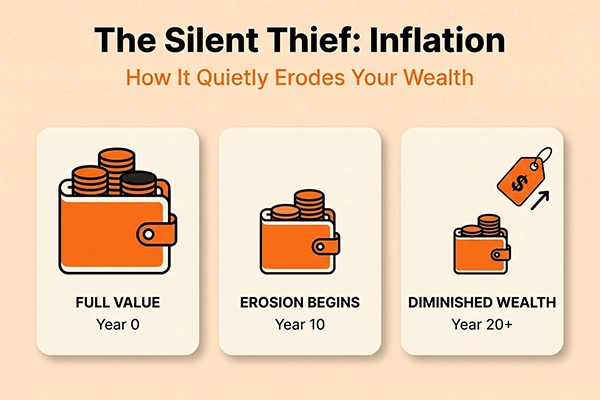
- Handle inflation more comfortably
- Stay financially independent longer
Many retirees make one common mistake. They keep all their money in savings accounts and slowly spend it month by month. Over time, the savings reduce, and the income stops growing.
A better way is to create different income sources that can support you after retirement. This helps you manage regular expenses without depending on only one income option. During the Wealth Building phase, people mainly focus on saving and growing money. After retirement, the focus shifts to the Wealth Distribution phase, where the goal is to create a steady income.
5 Smart Ways To Make Income After Retirement
Increase Stable Income Post-Retirement by Rental Income
How it Works: Rental property is the real estate that you buy, rent to others, and receive rent from every month. This can be a significant source of income to supplement pension or other retirement savings.
Tax Implications:
The income generated from renting out a property is treated as income and is taxed accordingly, though there are a number of deductions available:
- Home Loan Interest: Interest up to ₹2 Lakhs per year is tax deductible under Section 24B. This benefit can be claimed by both borrowers in a joint home loan.
- Municipal Taxes: Municipal taxes paid on the property can be claimed as a deduction.
- Standard Deduction: Section 24 allows a flat 30% deduction for maintenance and repairs, irrespective of the actual expenses incurred.
- Carrying Forward Losses: Losses from house property can be carried forward and adjusted against future rental income for up to 8 years.
Key Considerations:
- Property Management: Managing a property can be time-consuming and may require hiring a professional property management company.
- Income Affected by Vacancy Periods: Rental income may be impacted during periods when tenants are not occupying the property.
- Market Fluctuations: Occupancy rates and rental pricing are influenced by changing real estate market conditions.
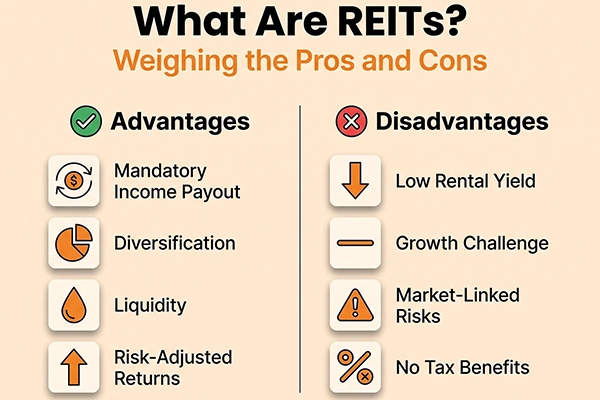
- Low Rental Yield in India: Residential properties in India generally offer lower rental yields when compared to overall property value.
For instance, if one property has a rent of ₹25,000 per month and the value of the house is ₹1 crore, then the NRY would be around 3%.
Interest Income to Generate Stable Income Post-Retirement
Interest-based investments provide regular income through fixed or floating interest rates. Indian retirees commonly choose:
- Bank fixed deposits (FDs)
- Post Office Monthly Income Scheme (MIS)
- Senior Citizen Savings Scheme (SCSS)
- Kisan Vikas Patra (KVP)
- Government and corporate bonds
These investment options usually pay monthly or quarterly interest, which can help manage regular retirement expenses.
Interest Rate Risk:
Rising interest rates benefit retirees holding these assets, while falling rates lead to lower income.
Tax Implications:
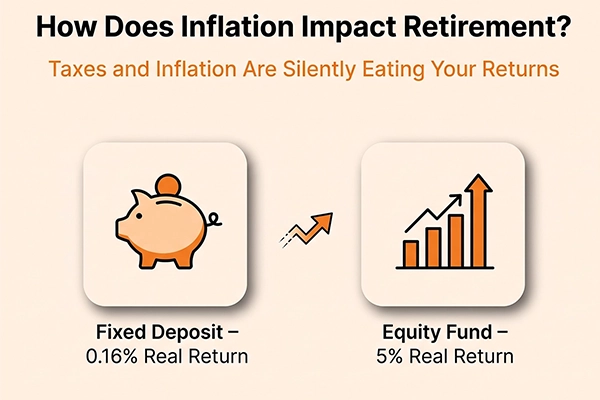
Interest income is generally taxed as per your income tax slab. Inflation is a major risk; if the inflation rate exceeds the interest rate, your real return is negative.
Example: If inflation is 6% and your FD interest is 5%, your real interest rate is -1%, meaning your purchasing power actually decreases over time.
Dividend Income for Generating Regular Income after Retirement
Dividends refer to the distribution of corporate earnings to shareholders. An individual who has retired can purchase stocks of reputable firms which have a track record of paying dividends. However, dividends may be reduced if the company faces financial difficulties.
Income Tax Related Information:
It depends on the particular income tax bracket. However, there is 10% TDS, if the dividends exceed ₹5,000 in a financial year.
Annuities to Generate Stable Income Post-Retirement
Annuities are financial contracts providing a guaranteed income stream for a specified period.
Immediate Annuities
Start paying out immediately upon purchase (e.g., a lump sum of ₹10 lakhs provides ₹10,000 monthly for life).
Deferred Annuities
Start paying out at a future date after an accumulation period.
Pros and Cons
- Pros: Guaranteed income for life, protection against market volatility.
- Cons: Limited flexibility, potential for lower returns, and surrender charges for early withdrawal.
Tax Implications:
A portion is considered return of capital (tax-free), while the remainder is taxable as per slab rates.
Systematic Withdrawal Plan (SWP) with Equity-Debt Switching
An SWP involves withdrawing a fixed amount from a mutual fund portfolio. Combining this with equity-debt switching helps balance growth with stability.
How it Works:
Initial Allocation: Predetermined split (e.g., 40% Equity, 60% Debt) based on risk tolerance.
Periodic Rebalancing:
- Market Up: Sell equity to secure profits and move them to debt.
- Market Down: Shift debt funds to equity to take advantage of lower prices.
- Withdrawals: Fixed amounts are typically withdrawn from the Debt portion to provide a steady income.
Tax Implications (As of current regulations)
- Equity Funds: LTCG (held > 12 months) is taxed at 12.5% for gains over ₹1.25 lakhs. STCG is taxed at 20%
- Debt Funds: LTCG (held > 36 months) is taxed at 12.5%. STCG is taxed at your applicable slab rate. (Note: Indexation benefits are no longer available for debt funds.
Useful Tips for Better Financial Stability After Retirement
Keep These Habits Simple and Always the Same
- Track monthly expenses regularly.
- Maintain health insurance coverage.
- Review investments once or twice a year.
- Avoid emotional financial decisions.
- Keep emergency funds separate.
- Reduce unnecessary debt.
- Discuss financial planning with family members.
- Small financial habits can help protect retirement savings for many years.
Smart Retirement Financial Planning With Wealth Crafts
The retirement income plan has to have an emphasis on regular income, easy investment decisions, and financial security for the long term. Certain retirees opt for fixed income investments, while others rely on their rental incomes or dividends and others even income from business enterprises. It would always be more effective to have various sources of income rather than relying on one single income source.
As a SEBI-registered retirement finance advisor in India, Wealth Crafts believes that retirement planning will ensure that individuals remain financially independent and take care of any future expenses effectively.