Essential Financial Tips Every Retiree in India Should Know

Table of Contents

    Why You Need a SEBI Registered Investment Adviser

    It’s a pleasant place to be as most retirees end up without having funds to take care of themselves. Having enough money will allow you to lead a life of dignity and pursue your dreams. While having money is good, it is very important to safeguard it and ensure that you do not end up regretting your decisions.


    Below are a few financial tips for retirees to be aware of

    A lot of money attracts unwanted attention. Especially from scammers trying you to sell instruments that have high commissions and long lock-ins. Stay away from instruments like traditional life insurance policies that have long lock-ins and high commissions.

    • Liquidity : It is likely that you would want to travel, spend time with your loved ones and explore various interests that you having been postponing. Not to mention of medical costs. All these require sufficient cash at quick notice. It would be helpful to always maintain liquid assets to take care of these scenarios.
    • Inflation : Inflation and Taxes continue till we are dead. While taxes reduce significantly when are incomes decrease during our retirement, inflation continues unabated. There is constant rinse in the cost of goods and not preparing for this can seriously hamper the standard of living during your golden years. For instance, if you start at Rs. 50,000/- of monthly expenses at 60 years, your monthly expenses are likely to touch Rs. 90,000/- when you touch 70 years at 6% inflation.
    • Investments : While liquidity and safety are very important, choosing the right investment instruments are vital. Leaving your money in the bank account is a recipe for disaster as it doesn’t help you overcome inflation. At 3.5% return from savings bank account and inflation of 6%, your wealth is de-growing every year and soon enough it would become difficult even to meet basic expenses. An investment adviser will help you identify the ideal asset allocation among cash, debt, equity, real estate among others, to help you achieve goals in time.
    • IInvestment Advisers : In India, you find lot of self-proclaimed investment advisers wanting to give financial tips to retirees. Insurance agents are behind commissions, stock brokers and mutual fund agents are behind brokerage and ponzi scammers are behind your money. They all have vested interests to sell you something.

    Only a SEBI Registered Investment Adviser is authorized to provide investment advisory services. Connect for a Free consultation call with our Fee Only Financial Planner will help you save tons of money and ensure that you are invested in instruments that are uitable for your profile.

    Calendar Icon Schedule a Call

    Recent Blogs

    Personal Finance Mistakes: How People Mismanage Their Money

    he most common mistakes people make is not having a financial plan.

    Learn More

    3 Pillars of Successful Investing Every Investor Should Know

    We long for happy retirement years and often have a list of to-dos. From going for vacations, pursuing hobbies or catching up with friends and family,

    Learn More

    5 Tips for Happy Retirement and Financial Security

    We long for happy retirement years and often have a list of to-dos. From going for vacations, pursuing hobbies or catching up with friends and family,

    Learn More

    Essential Financial Tips Every Retiree in India Should Know

    It’s a pleasant place to be as most retirees end up without having funds to take care of themselves.

    Learn More

    Compare ETF and Index Fund Investment Options in India

    Investing to secure your financial future is on your mind, but, you are likely to get overwhelmed to choose between the various investment instruments available.

    Learn More

    Fixed Income Investments: Benefits, Types & Key Risks

    Confused about fixed income investments? From bonds to T-bills, learn how each instrument works, key risks, and which one fits your financial goals.

    Learn More

    What Is a Super Top-Up Health Insurance Policy and How Does It Work?

    Base Policy and Super Top Up Policy are two commonly used options while taking Health Insurance. Health insurance is an important tool to safeguard your financial well-being against unexpected medical expenses. As medical treatments become more expensive

    Learn More

    Basics of Public Provident Fund (PPF)

    The Public Provident Fund (PPF) is a popular savings scheme introduced by the National Savings Institute of the Ministry of Finance in 1968.

    Learn More

    Limited Pay vs Regular Pay — Which Life Insurance Premium Option Is Right for You?

    Limited pay vs regular pay – it is easy to get confused between options for your life insurance premium payment. While Life insurance plays a crucial role in securing the financial future of your loved ones.

    Learn More

    Everything You Need to Know About EPF Taxation in India

    EPF does maintain its “EEE(exempt-exempt-exempt)” status but with certain conditions. “EEE” means the contributions towards EPF are exempt from income tax at the time of investment, interest earned on the contributions

    Learn More

    What Should You Do With Your Life Insurance Policy?

    In Indian families, pressure to buy traditional life insurance policies can be strong and multifaceted. Parents often play the “security card,” emphasizing the importance of safeguarding their child’s future and highlighting potential future burdens or painting a picture of an uncertain future without the policy.

    Learn More

    Comprehensive Guide on Home Loan Overdraft Facility

    Imagine a financial tool that combines the stability of a home loan with the flexibility of an overdraft account – that’s precisely what the Home Loan Overdraft Facility entails.

    Learn More

    How to Choose from Different Gold Investment Options

    Confused about gold investment options in India? From physical gold to SGBs, this guide compares costs, tax rules, and returns to help you make the right choice.

    Learn More

    Index Funds - Advantages, Risks & Suitability

    Index Funds are an investment instruments that are based on stock market indices like Sensex or Nifty. These funds are built using a pre-set basket of stocks from different sectors of the economy with predefined weights.

    Learn More

    Direct Funds vs Regular Funds - Are Direct Mutual Funds better ?

    Confused between direct and regular mutual funds? Compare expense ratios, NAV, and returns to find out which plan helps you grow your wealth long-term.

    Learn More

    Debt Mutual Funds Taxation Changed: What Should You Do

    Understand how Budget 2023 changed debt mutual fund taxation in India, removed indexation benefits and what it means for your investments compared to fixed deposits.

    Learn More

    Emergency Fund - Essential Safety Net For Personal Finances

    Emergency Fund can be your shield against financial storms. Life throws surprises, from unexpected medical bills to appliance breakdowns, emergencies can wreak havoc on your finances.

    Learn More

    SSY Interest Rates, Tax Benefits, & Withdrawal Rules

    Sukanya Samriddhi Yojana (SSY) is an initiative launched by the Government of India as part of its Beti Bachao, Beti Padhao campaign, (Save the Girl Child, Educate the Girl Child).

    Learn More

    7 Types of Financial Ratios to Assess your personal finance & ways to improve them

    Understanding the 7 types of financial ratios is a vital exercise that individuals should undertake to assess the state of their financial well-being.

    Learn More

    What Should you do with your 401K Account if you Move Back to India

    Moving back to your home country after years of working in the US is an exciting chapter. However, it also comes with its own set of financial considerations, especially when it comes to your US retirement savings.

    Learn More

    What Are ULIP Charges and How Do They Work

    Know about ULIP charges in India covering mortality, policy admin, switching, surrender, and guarantee fees to help you decide if ULIP is worth investing in.

    Learn More

    Key Features of NPS (National Pension Scheme)

    The National Pension Scheme is a government-sponsored retirement savings plan introduced in India in 2004. It provides a structured approach for individuals to build a retirement fund by making regular contributions.

    Learn More

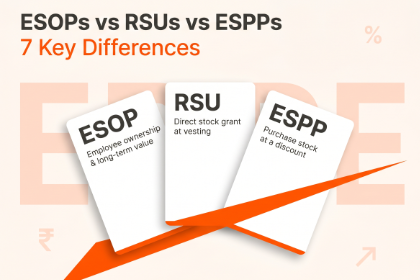
    ESOPs vs RSUs vs ESPPs - Understand the 7 key differences

    In today's competitive Indian job market, companies are increasingly turning to equity compensation plans to attract and retain top talent.

    Learn More

    12 Risks of Investing ESOPs/RSUs/ESPPs

    Imagine your future self, financially secure thanks to a hefty chunk of your employer's stock, a reward for your dedication and hard work.

    Learn More

    What Should You Do With Your Life Insurance Policy Decision

    Confused about what should you do with your life insurance policy? In Indian families, pressure to buy traditional life insurance policies can be strong and multifaceted.

    Learn More

    5 Proven Ways to Build Stable Post Retirement Income in India

    Retirement brings major changes in income and life. Investments and savings can help you meet your needs, but a steady income is still essential for daily expenses and regular cash flow.

    Learn More

    12 Must Follow Financial Practices Before Moving Abroad

    When one is leaving the familiar shores of India for a new life abroad, it may be both exciting and daunting. It's exciting to pack up your bags and head out on a new adventure, but one of the biggest challenges you will face is getting used to a new financial environment.

    Learn More

    5 Reasons to Prefer a Fee-Only Financial Planner in India

    The term "financial planner" is used often and very loosely. In India, many people call themselves financial planners, the insurance agent, the mutual fund distributor,

    Learn More

    How do Financial Planners & Advisors Get Paid in India?

    SEBI (Securities Exchange Board of India), with its latest amendments to Registered Investment Adviser (RIA) Regulations, mandates that all registered financial planners can charge only on two bases. A Financial Planner can either charge a fee for financial planning or earn from distribution of financial products.

    Learn More

    How to Choose The Best Financial Advisor In India

    If you are confused about how to choose the best financial advisor in India, you can thank the Securities Exchange Board of India (SEBI).

    Learn More
    21 April, 2026

    Income Tax Deductions & Exemptions: Full Guide for Taxpayers

    Salaried employees make up a big part of taxpayers, and their tax contributions matter. Income tax deductions provide various chances for them to save money on taxes.

    Learn More

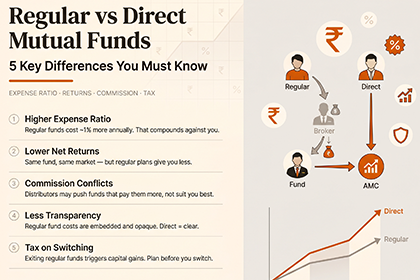
    5 Differences Between Regular Mutual Funds and Direct Mutual Funds

    In today's dynamic financial landscape, mutual funds have become a popular investment option in India. Whether you're a seasoned investor or just starting, the sheer number of options and the constant market fluctuations can feel daunting.

    Learn More

    6 Reasons to Review Your Financial Plan for Better Financial Health

    Reviewing your financial plan matters as much as using a trusted navigation system. When you move forward without regular reviews, you risk heading in the wrong direction.

    Learn More

    SEBI's mandatory disclosure requirement

    View More
    WhatsApp
    Phone Call