Compare ETF and Index Fund Investment Options in India

Table of Contents

    ETFs v/s Index Funds
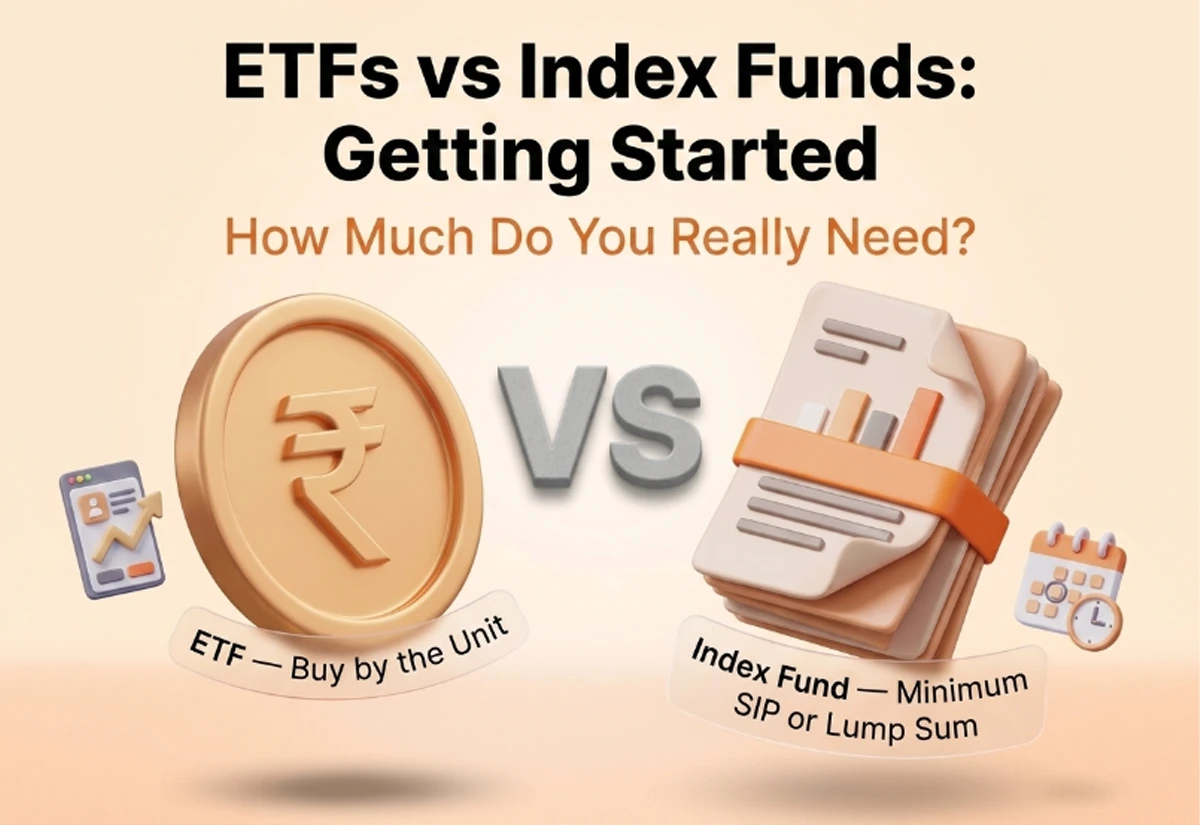
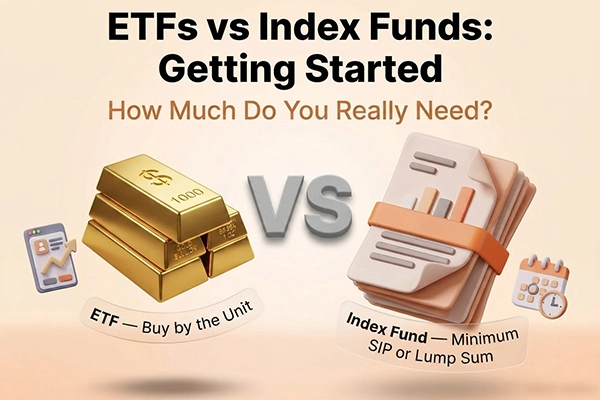
    Investing to secure your financial future is on your mind, but, you are likely to get overwhelmed to choose between the various investment instruments available. Among the popular instruments are bank FDs, Stocks, mutual funds and ETFs. Index funds and ETFs have similar characteristics and might look same. However, there are a few major differences and how they operate. Understanding these differences will you choose the instrument that is suitable for your situation.


    Exchange Traded Funds – ETFs

    There are different types of ETFs like currency ETFs, commodity ETFs, Bond ETFs and Stock ETFs. A few unique features are as below;

    1. Exchange Traded Funds or ETFs as their name suggests are traded on a stock exchange. These are passively managed funds that replicate an index.
    2. ETFs are traded at different prices through the day, based on the demand and supply for the particular ETF. This allows for real time pricing of your investments.
    3. ETFs invest in various instruments like commodities, stocks, bonds or any combination of these.
    4. There are some liquidity concerns for ETFs currently in India. More often, few investors have had to pay a premium when wanting to buy large quantities. While others have had to settle for a lesser value on the sell side.
    5. No fractional units are allowed for investments. This can deter a few people from investing due to higher minimums.

    Index Funds

    An Index Fund is a mutual fund that aims to track a Benchmark Index. A few features are;

    1. Index funds can be directly purchased from the mutual fund company and one does not require to open a separate demat account for this purpose. This helps you avoid costs associated with operating a demat account.
    2. Index Funds are more tax efficient, if you want to create different buckets for different time periods. Unlike ETFs where First In First Out accounting can increase your taxability, you could create different folio’s in Index Funds, one for short term and another for long term and achieve tax efficiency.
    3. The biggest advantage of index funds is that they allow for same day settlement when you want to initiate inter fund switches. During extreme market volatility, this helps you move your investments from equity to debt on the same day.
    4. Index funds have lower expense ratios compared to actively managed funds.

    While it’s very difficult to choose one over the other, the major advantage Index Funds over ETFs currently in India is that of Liquidity. It is prudent to invest in instruments that suit your profile and time horizon. Consult a fee-only SEBI Registered Investment Adviser to understand how these instruments can help you create wealth and achieve your financial goals.

    Book a Free consultation call with a Fee Only Financial Planner today to understand how you can benefit from these instruments in your portfolio.

    Calendar Icon Schedule a Call

    Recent Blogs

    Personal Finance Mistakes: How People Mismanage Their Money

    he most common mistakes people make is not having a financial plan.

    Learn More

    3 Pillars of Successful Investing Every Investor Should Know

    We long for happy retirement years and often have a list of to-dos. From going for vacations, pursuing hobbies or catching up with friends and family,

    Learn More

    5 Tips for Happy Retirement and Financial Security

    We long for happy retirement years and often have a list of to-dos. From going for vacations, pursuing hobbies or catching up with friends and family,

    Learn More

    Essential Financial Tips Every Retiree in India Should Know

    It’s a pleasant place to be as most retirees end up without having funds to take care of themselves.

    Learn More

    Compare ETF and Index Fund Investment Options in India

    Investing to secure your financial future is on your mind, but, you are likely to get overwhelmed to choose between the various investment instruments available.

    Learn More

    Fixed Income Investments: Benefits, Types & Key Risks

    Confused about fixed income investments? From bonds to T-bills, learn how each instrument works, key risks, and which one fits your financial goals.

    Learn More

    What Is a Super Top-Up Health Insurance Policy and How Does It Work?

    Base Policy and Super Top Up Policy are two commonly used options while taking Health Insurance. Health insurance is an important tool to safeguard your financial well-being against unexpected medical expenses. As medical treatments become more expensive

    Learn More

    Basics of Public Provident Fund (PPF)

    The Public Provident Fund (PPF) is a popular savings scheme introduced by the National Savings Institute of the Ministry of Finance in 1968.

    Learn More

    Limited Pay vs Regular Pay — Which Life Insurance Premium Option Is Right for You?

    Limited pay vs regular pay – it is easy to get confused between options for your life insurance premium payment. While Life insurance plays a crucial role in securing the financial future of your loved ones.

    Learn More

    Everything You Need to Know About EPF Taxation in India

    EPF does maintain its “EEE(exempt-exempt-exempt)” status but with certain conditions. “EEE” means the contributions towards EPF are exempt from income tax at the time of investment, interest earned on the contributions

    Learn More

    What Should You Do With Your Life Insurance Policy?

    In Indian families, pressure to buy traditional life insurance policies can be strong and multifaceted. Parents often play the “security card,” emphasizing the importance of safeguarding their child’s future and highlighting potential future burdens or painting a picture of an uncertain future without the policy.

    Learn More

    Comprehensive Guide on Home Loan Overdraft Facility

    Imagine a financial tool that combines the stability of a home loan with the flexibility of an overdraft account – that’s precisely what the Home Loan Overdraft Facility entails.

    Learn More

    How to Choose from Different Gold Investment Options

    Confused about gold investment options in India? From physical gold to SGBs, this guide compares costs, tax rules, and returns to help you make the right choice.

    Learn More

    Index Funds - Advantages, Risks & Suitability

    Index Funds are an investment instruments that are based on stock market indices like Sensex or Nifty. These funds are built using a pre-set basket of stocks from different sectors of the economy with predefined weights.

    Learn More

    Direct Funds vs Regular Funds - Are Direct Mutual Funds better ?

    Confused between direct and regular mutual funds? Compare expense ratios, NAV, and returns to find out which plan helps you grow your wealth long-term.

    Learn More

    Debt Mutual Funds Taxation Changed: What Should You Do

    Understand how Budget 2023 changed debt mutual fund taxation in India, removed indexation benefits and what it means for your investments compared to fixed deposits.

    Learn More

    Emergency Fund - Essential Safety Net For Personal Finances

    Emergency Fund can be your shield against financial storms. Life throws surprises, from unexpected medical bills to appliance breakdowns, emergencies can wreak havoc on your finances.

    Learn More

    SSY Interest Rates, Tax Benefits, & Withdrawal Rules

    Sukanya Samriddhi Yojana (SSY) is an initiative launched by the Government of India as part of its Beti Bachao, Beti Padhao campaign, (Save the Girl Child, Educate the Girl Child).

    Learn More

    7 Types of Financial Ratios to Assess your personal finance & ways to improve them

    Understanding the 7 types of financial ratios is a vital exercise that individuals should undertake to assess the state of their financial well-being.

    Learn More

    What Should you do with your 401K Account if you Move Back to India

    Moving back to your home country after years of working in the US is an exciting chapter. However, it also comes with its own set of financial considerations, especially when it comes to your US retirement savings.

    Learn More

    What Are ULIP Charges and How Do They Work

    Know about ULIP charges in India covering mortality, policy admin, switching, surrender, and guarantee fees to help you decide if ULIP is worth investing in.

    Learn More

    Key Features of NPS (National Pension Scheme)

    The National Pension Scheme is a government-sponsored retirement savings plan introduced in India in 2004. It provides a structured approach for individuals to build a retirement fund by making regular contributions.

    Learn More

    ESOPs vs RSUs vs ESPPs - Understand the 7 key differences

    In today's competitive Indian job market, companies are increasingly turning to equity compensation plans to attract and retain top talent.

    Learn More

    12 Risks of Investing ESOPs/RSUs/ESPPs

    Imagine your future self, financially secure thanks to a hefty chunk of your employer's stock, a reward for your dedication and hard work.

    Learn More

    What Should You Do With Your Life Insurance Policy Decision

    Confused about what should you do with your life insurance policy? In Indian families, pressure to buy traditional life insurance policies can be strong and multifaceted.

    Learn More

    5 Proven Ways to Build Stable Post Retirement Income in India

    Retirement brings major changes in income and life. Investments and savings can help you meet your needs, but a steady income is still essential for daily expenses and regular cash flow.

    Learn More

    12 Must Follow Financial Practices Before Moving Abroad

    When one is leaving the familiar shores of India for a new life abroad, it may be both exciting and daunting. It's exciting to pack up your bags and head out on a new adventure, but one of the biggest challenges you will face is getting used to a new financial environment.

    Learn More

    5 Reasons to Prefer a Fee-Only Financial Planner in India

    The term "financial planner" is used often and very loosely. In India, many people call themselves financial planners, the insurance agent, the mutual fund distributor,

    Learn More

    How do Financial Planners & Advisors Get Paid in India?

    SEBI (Securities Exchange Board of India), with its latest amendments to Registered Investment Adviser (RIA) Regulations, mandates that all registered financial planners can charge only on two bases. A Financial Planner can either charge a fee for financial planning or earn from distribution of financial products.

    Learn More

    How to Choose The Best Financial Advisor In India

    If you are confused about how to choose the best financial advisor in India, you can thank the Securities Exchange Board of India (SEBI).

    Learn More
    21 April, 2026

    Income Tax Deductions & Exemptions: Full Guide for Taxpayers

    Salaried employees make up a big part of taxpayers, and their tax contributions matter. Income tax deductions provide various chances for them to save money on taxes.

    Learn More

    5 Differences Between Regular Mutual Funds and Direct Mutual Funds

    In today's dynamic financial landscape, mutual funds have become a popular investment option in India. Whether you're a seasoned investor or just starting, the sheer number of options and the constant market fluctuations can feel daunting.

    Learn More

    6 Reasons to Review Your Financial Plan for Better Financial Health

    Reviewing your financial plan matters as much as using a trusted navigation system. When you move forward without regular reviews, you risk heading in the wrong direction.

    Learn More

    SEBI's mandatory disclosure requirement

    View More
    WhatsApp
    Phone Call