
Emergency Fund: Essential Safety Net for Personal Finances
Table of Contents
How Much Emergency Fund You Need and Where to Invest It?
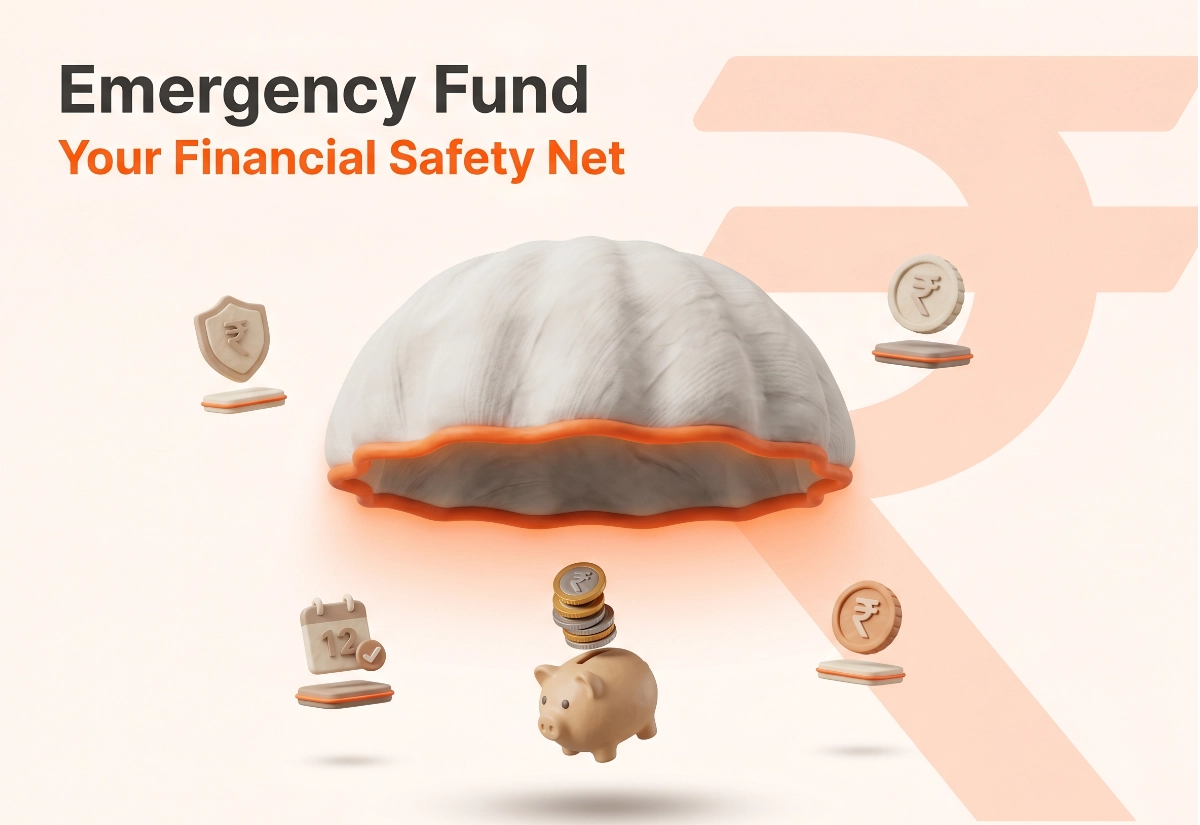
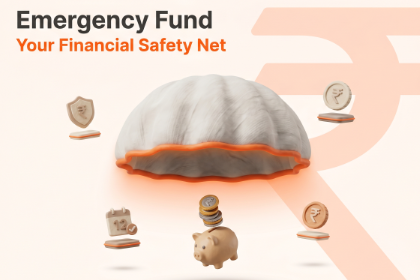
Emergency Fund can be your shield against financial storms. Life throws surprises, from unexpected medical bills to appliance breakdowns, emergencies can wreak havoc on your finances. Without a plan, these situations can force you into debt, raid your retirement savings, or even force you to make tough choices about your basic needs.
Read on to know more about the process of building a robust Emergency Fund, ensuring you're prepared for whatever life throws your way.
Why emergency fund is important?
An adequate Emergency Fund acts as a financial safety net, offering a buffer against life's unexpected events. Here's why having one is crucial:
- Peace of Mind : Emergencies, by definition, are unpredictable. A well-funded Emergency Fund provides peace of mind knowing you have resources to handle unexpected situations without undue stress.
- Financial Security : Unexpected expenses, like car repairs, medical bills, or appliance breakdowns, can wreak havoc on your finances. An Emergency Fund allows you to cover these costs without resorting to high-interest debt or dipping into your long-term savings goals.
- Debt Avoidance : When emergencies arise, the temptation to use credit cards or take out loans can be strong. However, this can lead to a cycle of debt with high-interest rates, further straining your finances. An Emergency Fund helps you avoid this trap.
- Maintains Financial Goals : Unexpected expenses can derail your long-term financial goals, like saving for a down payment on a house or retirement. Having an Emergency Fund protects your long-term plans by ensuring you don't have to withdraw from those savings to cover immediate needs.
- Improves Decision-Making : Financial stress can cloud judgment. An Emergency Fund allows you to approach unexpected situations with a clearer head, making sound financial decisions when faced with challenges.
Overall, an adequate Emergency Fund empowers you to weather financial storms and navigate life's uncertainties with greater financial security and peace of mind.
How Much Emergency Fund Should You Have?
There's no one-size-fits-all answer. The ideal Emergency Fund amount depends on several factors. A good rule of thumb is to have at least 9-12 months’ worth of your living expenses readily available. This covers essential costs like rent, groceries, utilities, EMI commitments and insurance premiums.
Carefully assess your individual circumstances and risk tolerance to determine the ideal Emergency Fund size for you. Regularly review and adjust your Emergency Fund goals as your financial situation evolves.
Factors Determining Your Emergency Fund Needs
- Living Expenses : This is the most crucial factor. Aim to cover 9-12 months’ worth of your essential living costs, like rent, groceries, utilities, EMI commitments and insurance premiums. The higher your monthly outgoings, the larger your Emergency Fund needs to be.
- Financial Dependents : If you have a spouse, children, or aging parents who rely on you financially, factor in their needs as well. This will increase the overall amount you should aim for.
- Job Security : People with stable jobs with low layoff risks might feel comfortable with a smaller Emergency Fund. Conversely, those in less secure jobs or freelance work might need a larger buffer to cover potential income gaps.
- Debt : High-interest debt payments can drain your Emergency Fund quickly. Focus on paying down high-interest debt first, as this reduces the overall financial strain and potentially allows for a smaller Emergency Fund.
- Health Insurance : A robust health insurance plan acts as a safety net for medical emergencies. If you don’t have good health insurance, you might need a larger Emergency Fund to meet medical expenses.
- Lifestyle : Those with a frugal lifestyle with minimal discretionary spending might require a smaller Emergency Fund compared to someone with a high-spending lifestyle.
Where to Park Your Emergency Fund?
The ideal place to park your Emergency Fund involves striking a balance between safety, liquidity, and potential returns. Here's a breakdown of factors to consider and suitable options:
Factors to Consider:
- Safety : Your Emergency Fund should be in a low-risk investment to ensure it's readily available when needed.
- Liquidity : Easy and quick access to your funds is paramount. You don't want to be stuck waiting for withdrawals during an emergency.
- Returns : While maximizing returns isn't the primary goal, earning some growth on your Emergency Fund is preferable than keeping it idle.
Where should you invest?
1. Savings Account:
- Pros : Highly liquid, funds are readily accessible with a debit card or ATM withdrawals.
- Cons : Typically offer low-interest rates, meaning inflation can erode the purchasing power of your Emergency Fund over time.
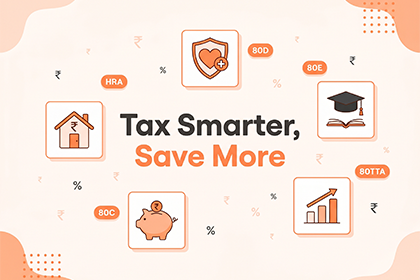
- Taxation : Section 80TTA of the Income Tax Act allows a deduction of up to Rs 10,000 per year for savings account interest. Except for senior citizens, it applies to all individuals and HUFs (those aged 60 and older).
2. Short term Fixed Deposits:
- Pros : FDs offer slightly higher returns than savings account, making it an attractive option for emergency savings. The DICGC insures all deposits such as savings, fixed, current, recurring, etc. deposits up to a maximum of ₹ 5,00,000 for both principal and interest amount for each bank.
- Cons : FDs lock your money in for a fixed term. Early withdrawal typically comes with a penalty, which could reduce your available funds during an emergency.
- Taxation : Interest on Fixed deposits are taxed as per your income tax slab rates. If you are falling under higher tax brackets then, post-tax returns from FD are generally lower than inflation, which means your purchasing power could erode slightly over time. If the interest generated on fixed deposits exceeds Rs. 40,000 in a given fiscal year, a 10% tax deducted at source (TDS) is applied. The TDS threshold for senior citizens (60 and over) is Rs. 50,000. Any senior citizen as a resident individual in India can claim a deduction of up to Rs 50,000 from the interest income earned on deposits (saving or fixed) during the concerned financial year.
Bonus Tip : A sweep-in facility ensures that if funds in your Savings Account are falling short for a transaction, the bank will transfer the deficit amount from your Fixed Deposit to your Savings Account without effecting the interest rate on your Fixed Deposit.
3. Debt Mutual Funds:
- Pros : Invest in low-risk securities like government bonds, offering slightly higher returns than Fixed deposits & savings account. Generally, very liquid, with same-day or next-day redemption options (up to a certain limit).
- Cons : While unlikely, there's a minimal chance of losing a small portion of your principal investment due to market fluctuations.
- Taxation : Before April 1st, 2023, debt mutual funds in India offered a tax advantage. If held for more than 3 years, gains were considered long-term capital gains (LTCG) taxed at a beneficial rate with indexation (adjusting for inflation). This made them an attractive option for Emergency Fund parking and for building wealth. However, after March 31st, 2023, the rules changed. Debt mutual funds are now taxed like fixed deposits, with gains taxed at your income slab rate regardless of the holding period. This reform aims for tax parity but reduces the tax benefit of debt mutual funds. Click here to know more about debt mutual funds.
What to Avoid while investing for emergency fund:
- Long term Fixed Deposits (FDs) with lock-ins : Locking your money away for a long-term fixed term reduces liquidity. Early withdrawals typically incur higher penalties, making them unsuitable for Emergency Funds. Fixed deposits (FDs) expose you to two main risks: reinvestment risk and interest rate risk.
Reinvestment risk arises because your FD locks in an interest rate for a fixed term. If interest rates come down when your FD matures, you'll have to reinvest at a lower rate, potentially reducing your overall return.
Interest rate risk simply means that if interest rates fall in general, the fixed rate on your FD may not keep pace with inflation, causing your purchasing power to decline.
- Stocks or Bonds : These involve higher risks of market fluctuations, which could result in losses when you need to access your funds.
- Real Estate : Highly illiquid and can take time to sell if you need quick access to cash. Not suitable for Emergency Funds.
- Gold : Gold prices can fluctuate significantly in the short term. Selling physical gold, like jewelry, can be time-consuming and costly. You might need to find a reputable buyer and potentially accept a lower price than the spot price (current market value).
It is important to note that an Emergency Fund should be stable and predictable, not subject to market swings.
Choosing the Right Option:
The best option depends on your individual needs and priorities.
- If maximum liquidity is your top concern, a savings account or fixed deposits might be ideal.
- If you're comfortable with a slightly higher risk profile in exchange for potentially better returns, short duration debt mutual funds could be a good choice.
Remember, the key is to find the balance that works best for you. It's also possible to diversify your Emergency Fund across different options depending on your risk tolerance and liquidity needs.
How to build emergency corpus?
- Budgeting : Create a budget and identify areas to cut back. Allocate a fixed amount towards your Emergency Fund each month.
- Pay yourself first : Treat your Emergency Fund contribution like a bill and pay it before other expenses.
- Windfalls : Use tax refunds or bonuses to boost your Emergency Fund.
- Replenish after use : Once you use your Emergency Fund, prioritize replenishing it as soon as possible.
Remember, an Emergency Fund is your financial safety net. By building and maintaining it, you can face unexpected situations with peace of mind.
Don't wait for disaster! Start building your Emergency Fund today. Take control of your financial future. Calculate your ideal Emergency Fund amount and create a plan to reach it! Feeling unsure about how much you need or the best way to save for your Emergency Fund? Schedule a free consultation call with our financial advisor today! We'll help you create a personalized emergency savings plan.