
How to Choose a Financial Advisor in India?
Table of Contents
How to Identify a Trusted Financial Advisor in India?

If you are confused about how to choose the best financial advisor in India, you can thank the Securities Exchange Board of India (SEBI). In 2013, SEBI introduced the Investment Adviser regulations to regulate the activities of individuals calling themselves financial advisors.
This regulation was established to protect the interests of investors from unqualified individuals. SEBI mandates compulsory registration for any individual or entity wishing to provide investment advisory services.
You can verify registered professionals on the SEBI website, which provides an exhaustive list of SEBI Registered Investment Advisers (RIA) in India, though it does not differentiate between fee-based and fee-only financial planners.
Check the official SEBI list of registered Investment AdvisersHow to Choose the Best Financial Advisor in India?
Many individuals claim to be the best financial advisors in India, often promising or even assuring higher returns. We urge investors to stay away from such false promises. To find a legitimate professional, look for these "must-have" credentials:
SEBI Registered Investment Advisor (RIA)
SEBI is the regulatory authority for financial markets in India. It mandates that every entity providing financial planning services must be registered. Always ensure the person you deal with is on the official SEBI list and follows their "Do’s and Don’ts" for investor awareness.
Certified Financial Planner (CFP)
The Financial Planning Standard Board (USA) certifies individuals who pass stringent norms related to personal finance. This certification is the global "gold standard" for financial management. You can search for these professionals in the FPSB directory.
Three Types of Financial Advisor
Flat Fee-Only Financial Advisor
A Fee-Only Financial Planner is directly compensated by the investor. They charge a flat fee for the financial plan and advisory services and do not earn any commissions or brokerage from the products they recommend. This eliminates conflicts of interest, as they do not receive "kickbacks." These planners are bound by a fiduciary responsibility to keep your best interests in mind.

Fee-Based Financial Advisor
A Fee-Based Financial Planner charges the investor a planning fee but also receives commissions from the products or strategies they recommend. This "twin charge" model is a cause for concern due to potential conflicts of interest. Under current SEBI regulations, an advisor generally cannot charge a planning fee and sell commission-based instruments to the same client.
Distributors of Financial Instruments
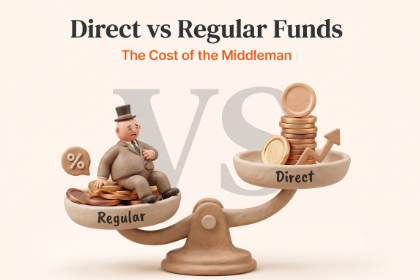
Distributors earn income through commissions or brokerage generated by selling investment products (mutual funds, stocks, insurance). They are not mandated by fiduciary responsibility, which can lead to conflicts of interest. Many investors are lured by "FREE" services, failing to realize that the recommended products often carry high hidden commissions (e.g., regular mutual funds vs. direct mutual funds).
6-Step Financial Planning Process
A high-quality advisor follows a structured process to help clients achieve their goals:
- Establish and define the relationship
- Gather client data and goals.
- Analyze and evaluate financial status.
- Develop and present recommendations.
- Implement the recommendations.
- Monitor the progress.
Types of Advisors You Should Stay Away From
Recommends Investments Without Risk Profiling
A strong financial plan requires a proper risk profile. Dealing with an advisor who skips this is dangerous. A proper profiling evaluates:
- Risk-taking capability : Your income and net worth
- Willingness to take risk : Your emotional tolerance for market volatility.
- Need to take risk : The return required to meet your specific financial goals.
Assures Guaranteed Returns
Human greed is a major destroyer of wealth. Stay away from anyone promising "guaranteed" returns in market-linked investments; these are often markers of Ponzi schemes.
Offers "Get Rich Quick" Schemes
Wealth creation takes time and discipline. It is important to understand the magic of compounding: for example, a monthly investment of ₹5,000 at 10% p.a. can grow to over ₹1,00,00,000 over 30 years. Discipline is more important than chasing extreme returns.
Confuses You with Complicated Instruments
Avoid advisors who push complex products just to seem exclusive. Simple products like mutual funds and PPF are often the most effective. Complex presentations at fancy hotels are usually sponsored by the high costs of the products being sold to you.
Common Mistakes to Avoid When Choosing a Financial Advisor
Many people rush this decision. Here are mistakes you should avoid:
- Choosing based on brand name only
- Trusting friends without checking details
- Ignoring fee structure
- Looking for “quick profit” advice
- Not verifying SEBI registration
- Mixing insurance and investment blindly
Simple Checklist Before You Decide
Use this quick list before finalizing:
- Advisor is SEBI registered
- Fees are clear and written
- No pressure to buy products
- Plan is based on your goals
- Communication is simple and clear
- You feel comfortable asking questions
Choose Wealth Crafts for SEBI Registered Investment Advisor
We are a SEBI Registered Investment Adviser (Registration No. INA000018328 and a flat fee only financial planner based in Bangalore, India. We are legally and ethically obligated to act in your best interest at all times. We help individuals manage wealth through comprehensive planning covering budgeting, risk mitigation, investment management, retirement, and tax planning.
We provide the right perspective on your life goals and aspirations through a Comprehensive Financial Plan. Wealth Crafts is among the few Fee-Only planners in India.
We work with clients across India (Bangalore, Mumbai, Chennai, Kolkata, Delhi) and the world via online tools like Zoom and Google Meet.
Book Your Free Introductory Call